Longitudinal Analysis
Organizations are more than a trendline.
An organization is not a flat line across the years. It is a living institution with a history, a rhythm, and a personality. The numbers matter, but they do not explain everything.
Over time, the shape of change tells a deeper story. Some organizations accelerate. Some steady themselves. Some look stable until the structure underneath begins to shift. ArtMetrics reads that movement, not just the final year.
The first clue
The sparkline is not decoration.
A single filing can tell you where an organization stood once. A trajectory shows how it behaves over time. The movement becomes the argument.
Why the names exist
Naming the pattern is part of understanding it.
We are not assigning generic labels to generic entities. We are reading arts organizations, mission-driven groups, and community institutions whose identities are too complex for flat categories.
That is why the trajectories have names. A name gives shape to the pattern. It makes the movement memorable. It helps people recognize what they are looking at without reducing the organization to a number.
Some organizations feel like a spike. Some feel like erosion. Some feel stable until they do not.
The system behind the story
One filing does not explain an institution.
ArtMetrics connects people, years, and organizational facets across time. We look at revenue, compensation, program score, and governance score together so the story becomes visible.
The result is not just a better score. It is a better understanding of how the organization behaves, where it is under strain, and what kind of institution it has become.
We are not looking for a snapshot. We are looking for a pattern.
Introduce the characters
A few examples from the trajectory deck.
Each thumbprint is a recurring institutional character. It shows up when the same forces repeat across organizations and across years. Once you know what to look for, the pattern becomes hard to miss.
Thumbprint
Governance Lag
The State (Diagnosis)
Archetypal Identity
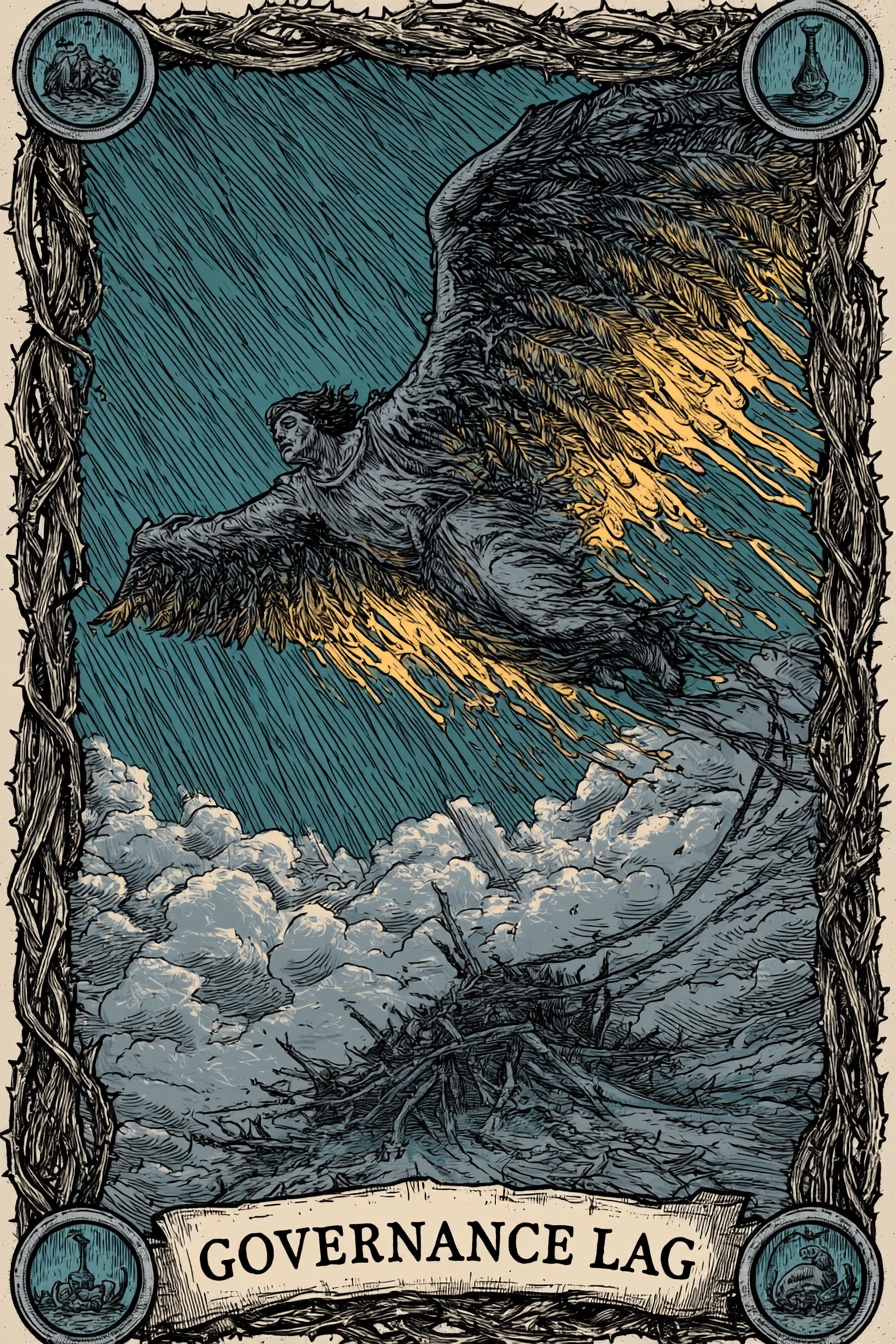
This card represents the perilous thrill of rapid success outstripping the safety net. It is the card of the "founder's high," where money and scale are pouring in, but the scaffolding meant to hold it all together hasn't been built yet.
The Data Signature
- Revenue and Program Scale spike by >30% over 2-3 years.
- Governance Score remains entirely stagnant, or even drops.
The Meaning
When drawn upright, this card is a warning wrapped in a congratulation. The organization is highly successful at fundraising and programming, but they are operating a multi-million dollar machine with a "friends and family" board. A massive compliance failure, legal issue, or burnout event is imminent unless the board is immediately professionalized.
The Remedy (Prescription)
Actionable Advice for Funders
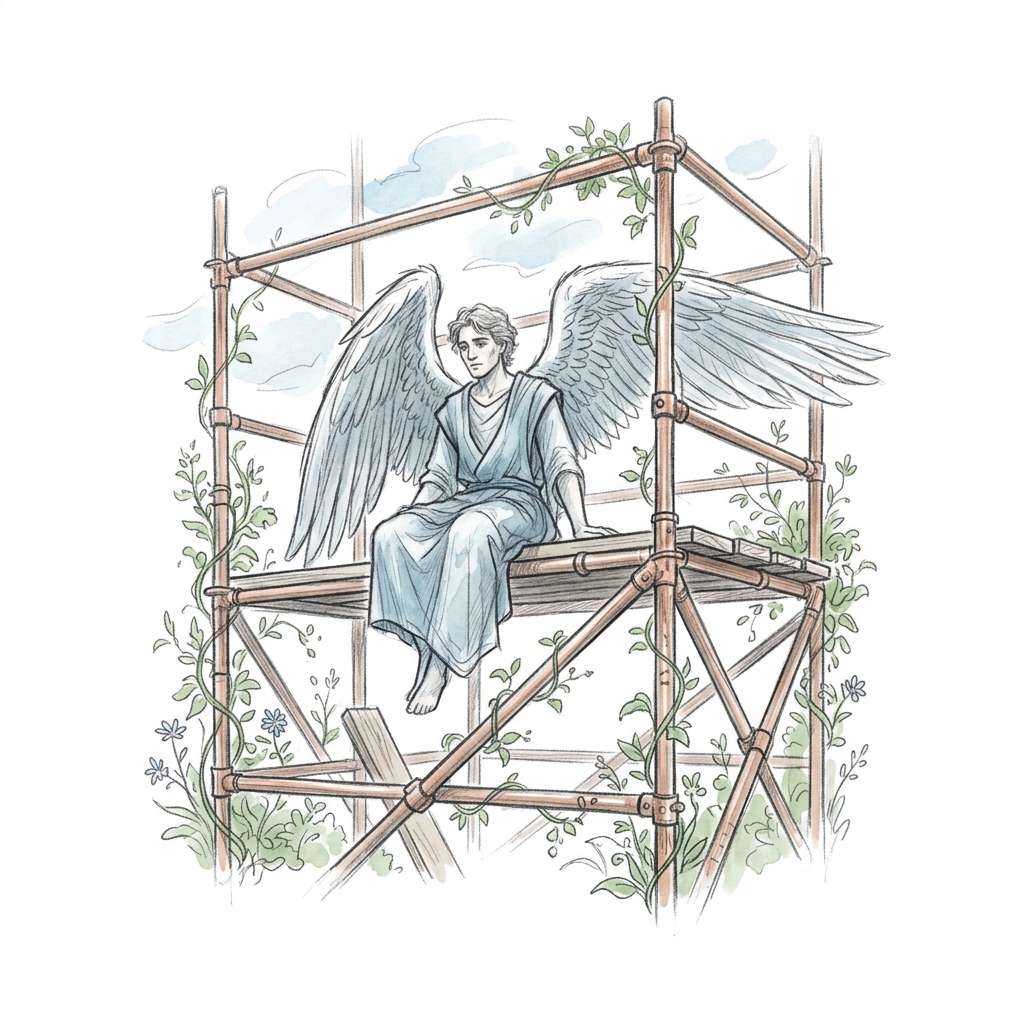
Celebrate the growth, but require governance milestones (e.g., adding 3 independent board members, adopting a conflict-of-interest policy) as a condition for the next tranche of funding. Help them build the chassis to match the engine.
When Reversed (Sacrifice)
When reversed, it indicates "governance catching up." The organization has paused its aggressive growth specifically to recruit independent board members, write policies, and build the infrastructure required for its new size.
Thumbprint
Programmatic Contraction
The State (Diagnosis)
Archetypal Identity
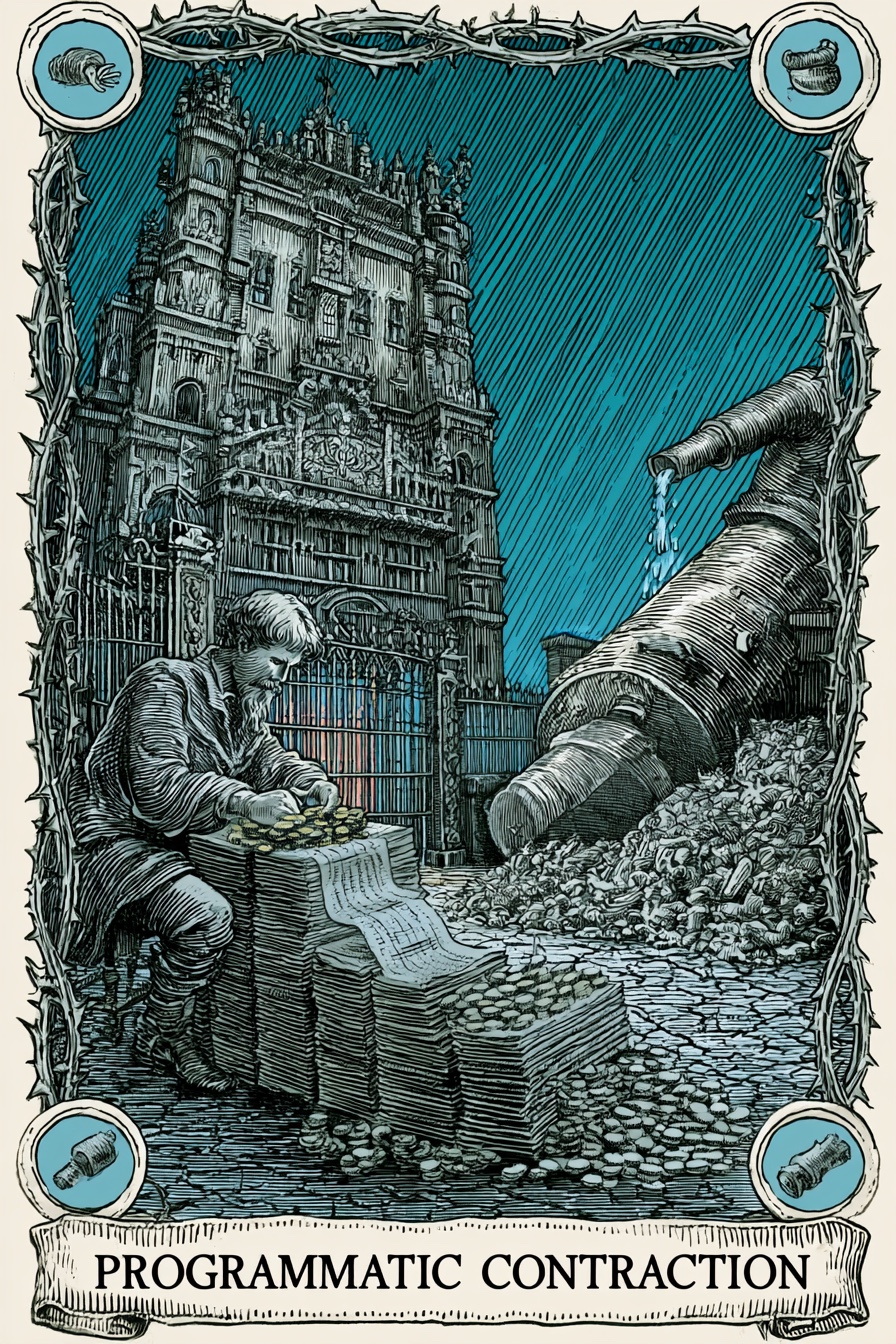
This card represents the institution forgetting its own purpose. It is the card of self-preservation, where the machinery of running the nonprofit has become more important than the art or the mission it was designed to serve.
The Data Signature
- Total revenue is stable or growing.
- Program Score (the percentage of expenses actually spent on program services) shrinks by >10% over 3 years.
The Meaning
When drawn upright, the organization has become bloated. They are highly efficient at raising money, but they are spending all that money on fundraisers, administrators, and consultants rather than putting it on the stage or into the community. The "tail is wagging the dog."
The Remedy (Prescription)
Actionable Advice for Funders
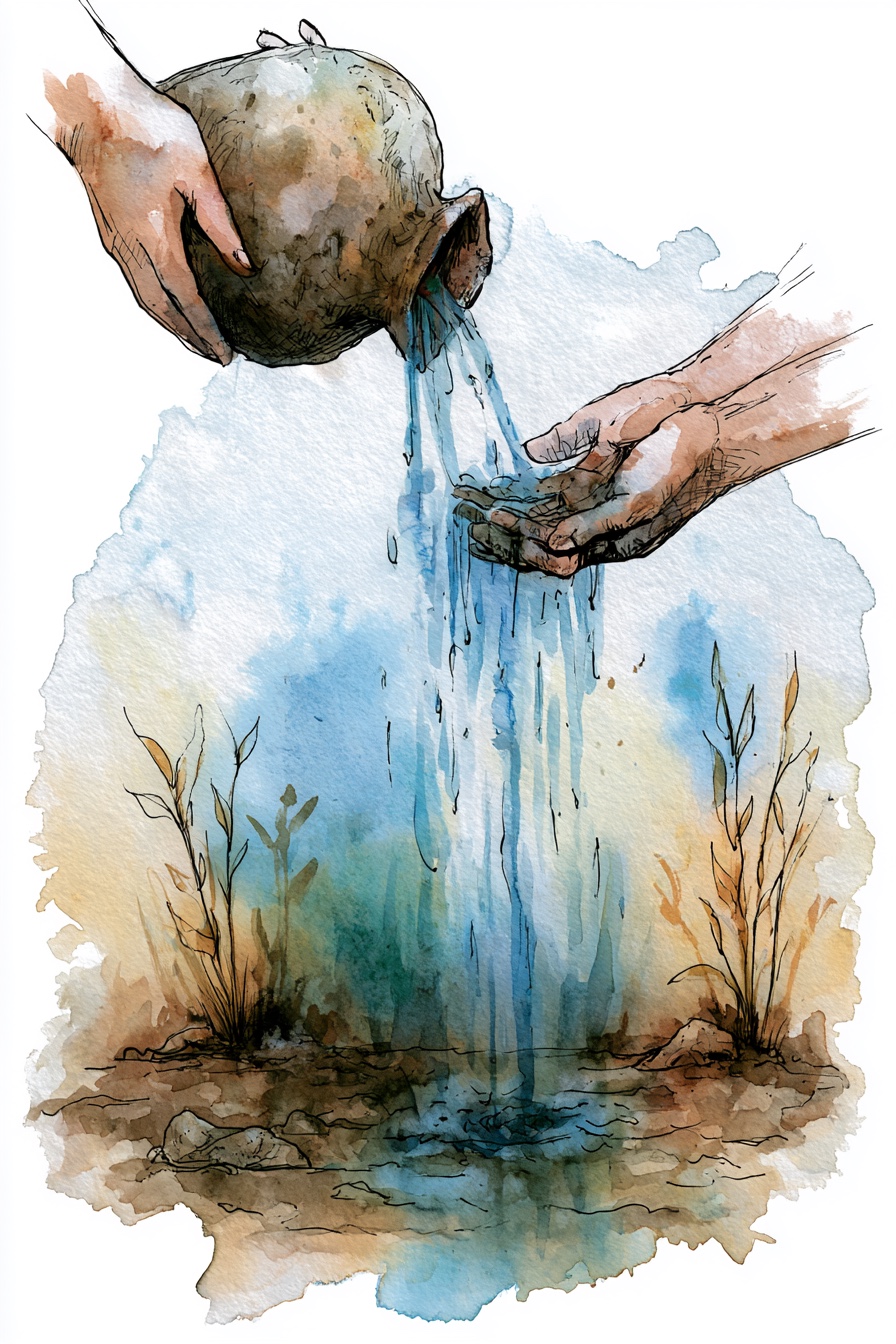
Demand a program-expense ratio audit. Stop funding general operations and restrict all new grants specifically to pass-through funds for artists or direct program delivery until the organization rightsizes its administrative footprint.
When Reversed (Sacrifice)
When reversed, it signifies a "return to roots." The organization has recently slashed its administrative overhead and redirected massive amounts of capital back into the hands of artists, creators, and community members.
Thumbprint
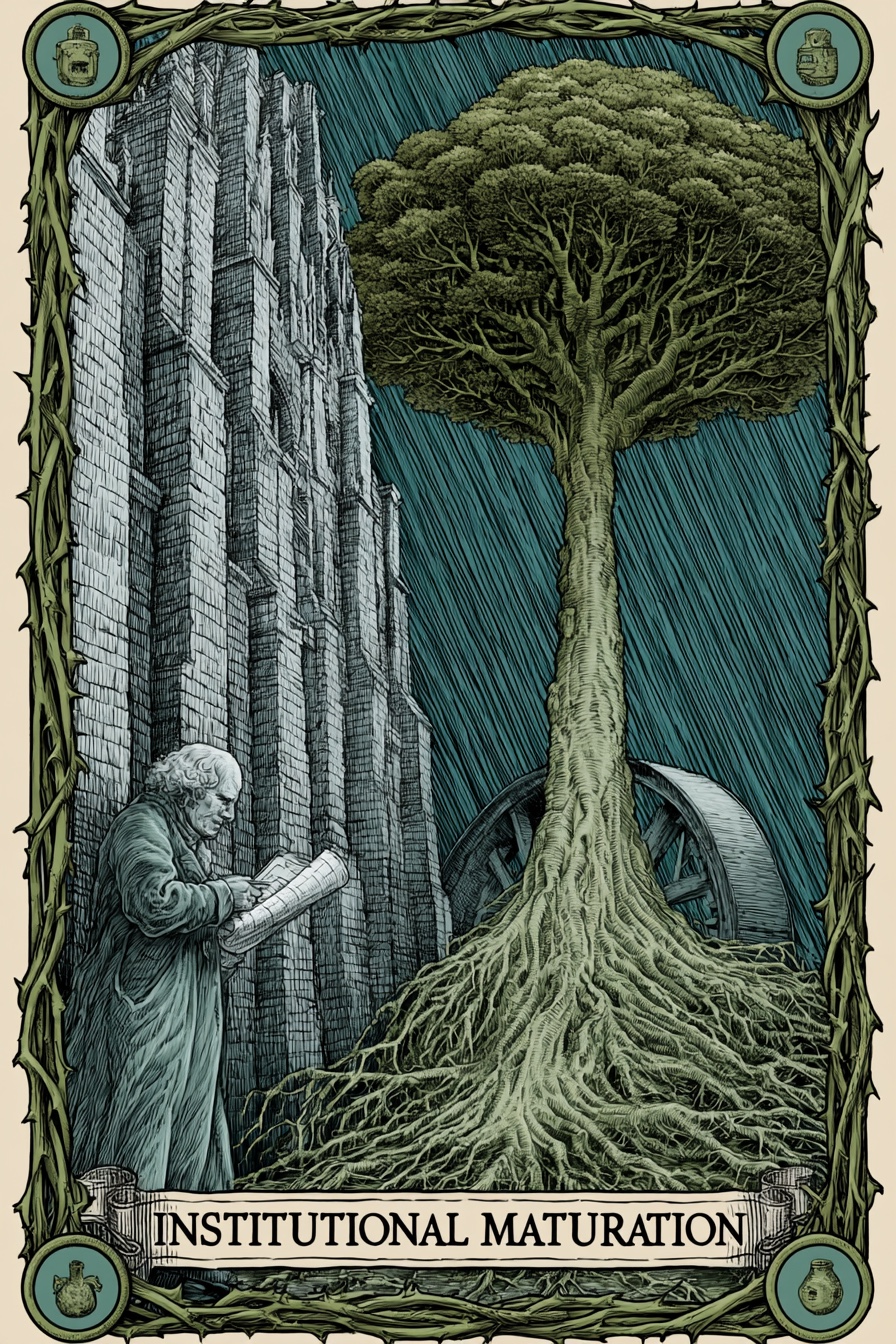
Institutional Maturation
The State (Diagnosis)
Archetypal Identity
This card represents the highest ideal of nonprofit leadership. It is the card of the master builder who constructs a cathedral they know they will never live to see finished.
The Data Signature
- 10-year slow, steady, concurrent growth.
- The Financial Health, Governance Score, and Program Scale are all moving upward in lockstep.
The Meaning
When drawn upright, this is the gold standard. The board and executive leadership are in perfect alignment. They are scaling their oversight, their fundraising, and their mission impact concurrently. They do not take risky leaps, and they do not hoard money. They are a "Blue Chip" investment that will anchor the community for generations.
The Remedy (Prescription)

Actionable Advice for Funders
This organization is a foundational pillar of the sector. Use them as an anchor. Provide them with massive, multi-year, unrestricted funding, and ask their leadership to mentor smaller, struggling organizations in your portfolio.
When Reversed (Sacrifice)
When reversed, it indicates a rare "growth plateau." The organization is perfectly healthy but has become too comfortable, perhaps needing a visionary shock to the system to avoid slipping into complacency.
1-3 years
Acute Movements
Immediate shifts where momentum, volatility, or strain can change the organization quickly.
Thumbprint
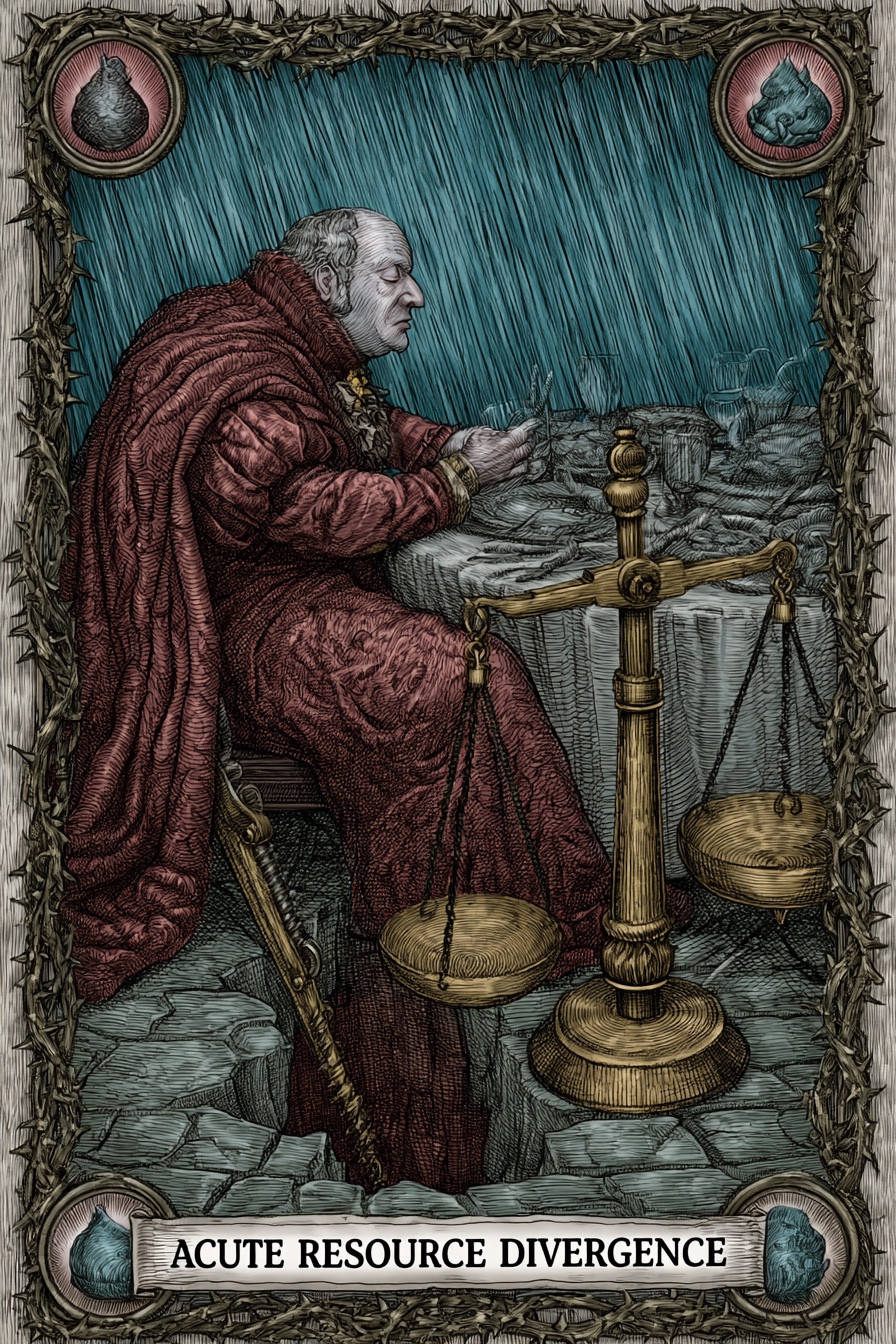
Acute Resource Divergence
The State (Diagnosis)
Archetypal Identity
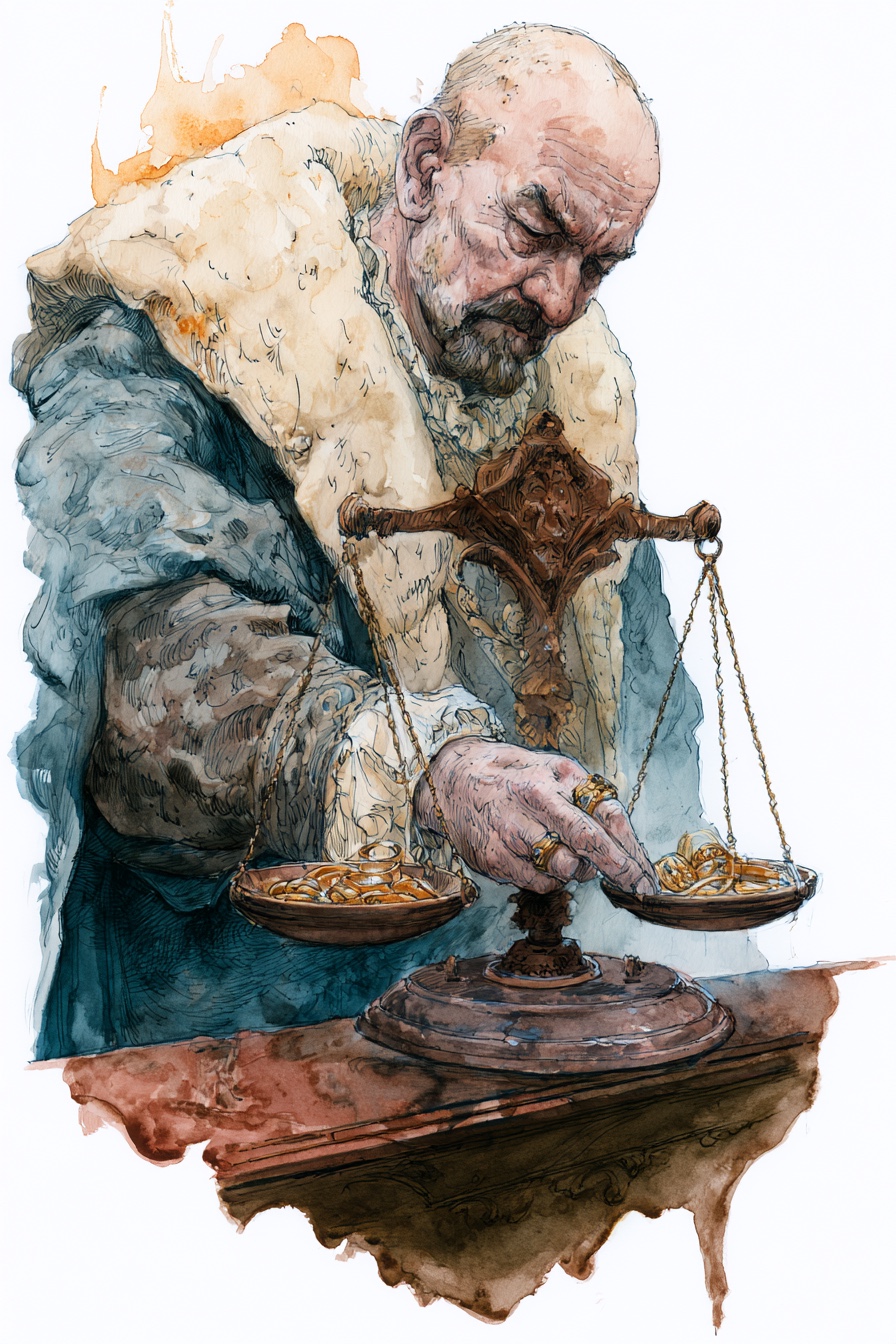
This card represents the disconnect between a shifting reality and the leadership's willingness to adapt. It is the card of denial, representing an organization that continues to feast while the granaries are emptying.
The Data Signature
- 3-year trailing revenue contracts by >15%.
- Executive compensation rises or remains stubbornly flat.
- The percentage of revenue consumed by top officers spikes dramatically.
The Meaning
When drawn upright in an organizational reading, this card signals an impending structural crisis. The leadership is protecting their own compensation or administrative comfort at the direct expense of the organization's survival. It predicts imminent board conflict, staff layoffs, or insolvency if the "squeeze" is not addressed.
The Remedy (Prescription)
Actionable Advice for Funders
Do not provide unrestricted funding to this organization until the board renegotiates executive compensation or severely cuts administrative overhead. Funding this organization now is pouring water into a leaking bucket.
When Reversed (Sacrifice)
When reversed, this card indicates a "sacrifice." The leadership has recognized the shifting economic reality and taken voluntary pay cuts or reduced administrative overhead to match the new, smaller footprint of the organization.
Thumbprint
Governance Lag
The State (Diagnosis)
Archetypal Identity
This card represents the perilous thrill of rapid success outstripping the safety net. It is the card of the "founder's high," where money and scale are pouring in, but the scaffolding meant to hold it all together hasn't been built yet.
The Data Signature
- Revenue and Program Scale spike by >30% over 2-3 years.
- Governance Score remains entirely stagnant, or even drops.
The Meaning
When drawn upright, this card is a warning wrapped in a congratulation. The organization is highly successful at fundraising and programming, but they are operating a multi-million dollar machine with a "friends and family" board. A massive compliance failure, legal issue, or burnout event is imminent unless the board is immediately professionalized.
The Remedy (Prescription)
Actionable Advice for Funders
Celebrate the growth, but require governance milestones (e.g., adding 3 independent board members, adopting a conflict-of-interest policy) as a condition for the next tranche of funding. Help them build the chassis to match the engine.
When Reversed (Sacrifice)
When reversed, it indicates "governance catching up." The organization has paused its aggressive growth specifically to recruit independent board members, write policies, and build the infrastructure required for its new size.
Thumbprint
Programmatic Contraction
The State (Diagnosis)
Archetypal Identity
This card represents the institution forgetting its own purpose. It is the card of self-preservation, where the machinery of running the nonprofit has become more important than the art or the mission it was designed to serve.
The Data Signature
- Total revenue is stable or growing.
- Program Score (the percentage of expenses actually spent on program services) shrinks by >10% over 3 years.
The Meaning
When drawn upright, the organization has become bloated. They are highly efficient at raising money, but they are spending all that money on fundraisers, administrators, and consultants rather than putting it on the stage or into the community. The "tail is wagging the dog."
The Remedy (Prescription)
Actionable Advice for Funders
Demand a program-expense ratio audit. Stop funding general operations and restrict all new grants specifically to pass-through funds for artists or direct program delivery until the organization rightsizes its administrative footprint.
When Reversed (Sacrifice)
When reversed, it signifies a "return to roots." The organization has recently slashed its administrative overhead and redirected massive amounts of capital back into the hands of artists, creators, and community members.
Thumbprint
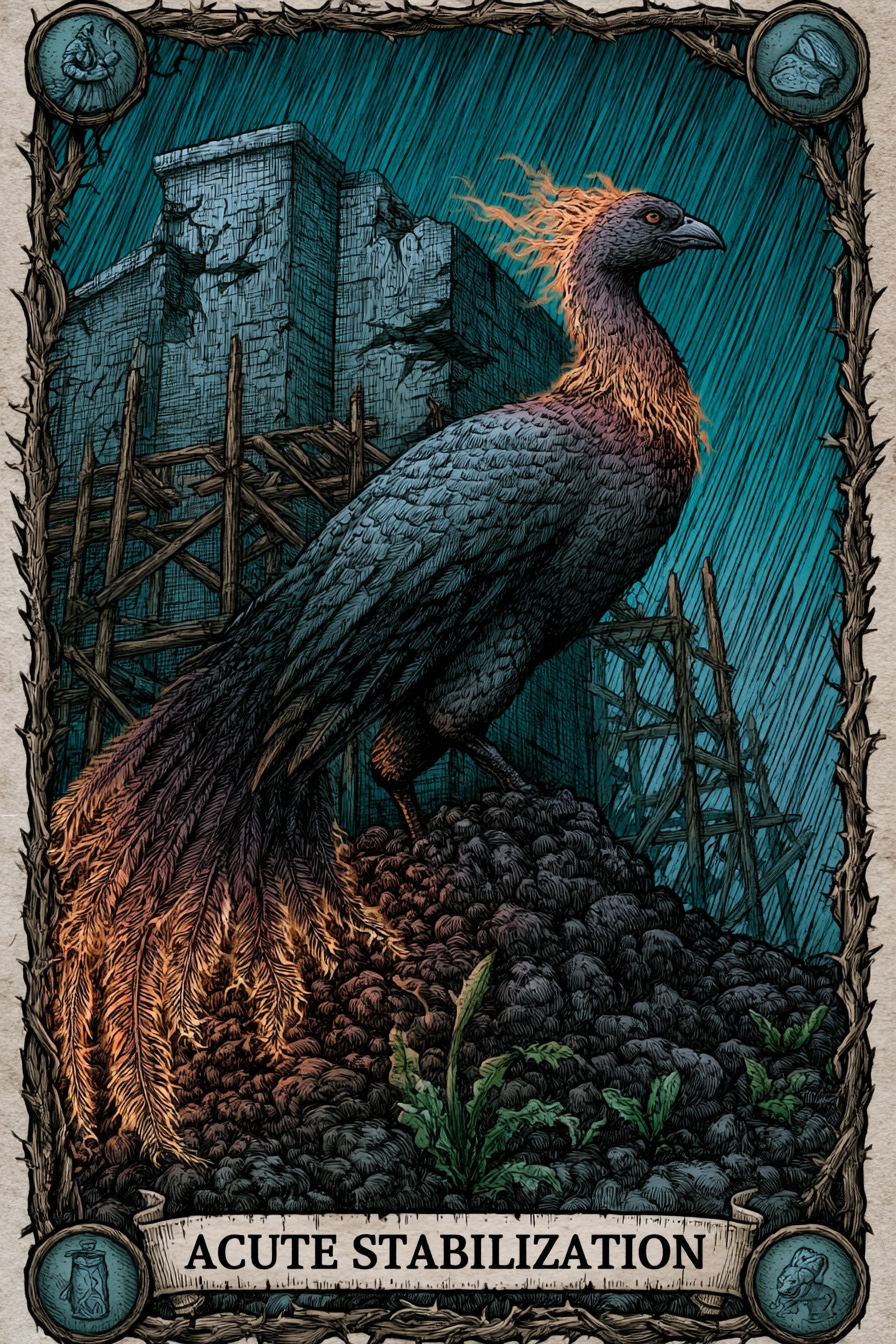
Acute Stabilization
The State (Diagnosis)
Archetypal Identity
This card represents survival, awakening, and the hard work of recovery. It is the card of the patient who finally went to the doctor and took the medicine.
The Data Signature
- The organization was previously in the "Priority Review" risk tier (Overall Score < 30).
- Over the last 3 years, they have demonstrated consecutive, measurable improvements in both Financial Score and Governance Score.
The Meaning
When drawn upright, this is a highly auspicious card. The organization was on the brink of collapse but has successfully executed a turnaround. The board woke up, perhaps new leadership was installed, and they have done the unglamorous, difficult work of stabilizing the finances and installing oversight policies.
The Remedy (Prescription)

Actionable Advice for Funders
This is the moment to invest heavily. The organization has proven they can do the hard work of reform. Funding them now rewards good governance and provides the exact fuel they need to transition from "surviving" to "thriving."
When Reversed (Sacrifice)
When reversed, it indicates a "false dawn" or a "dead cat bounce." The stabilization was a mirage—perhaps a single, massive one-time grant that temporarily fixed the spreadsheet but did not change the underlying structural rot.
3-5 years
Structural Trends
Medium-term patterns that reveal operating philosophy, not just isolated financial events.
Thumbprint
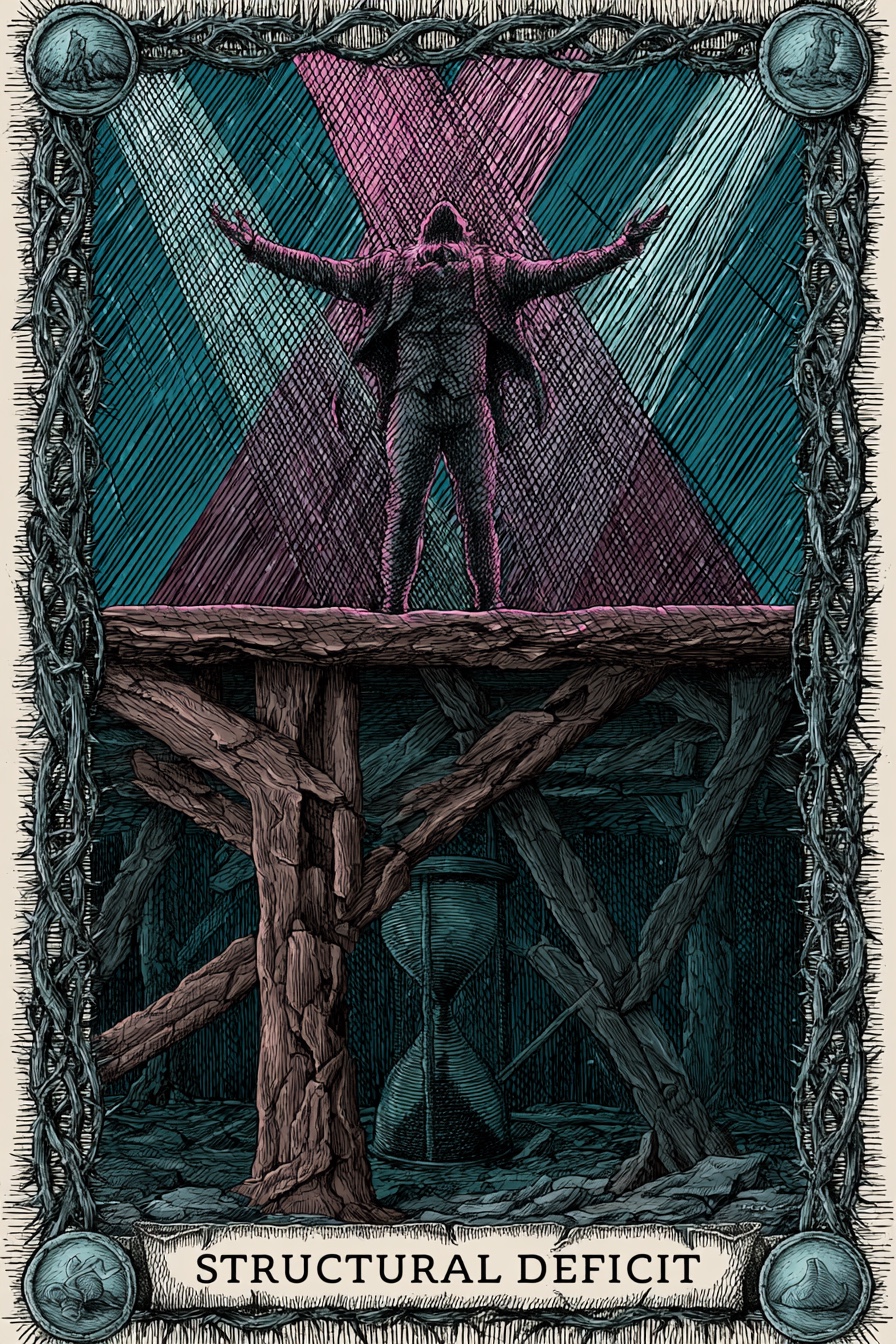
Structural Deficit
The State (Diagnosis)
Archetypal Identity
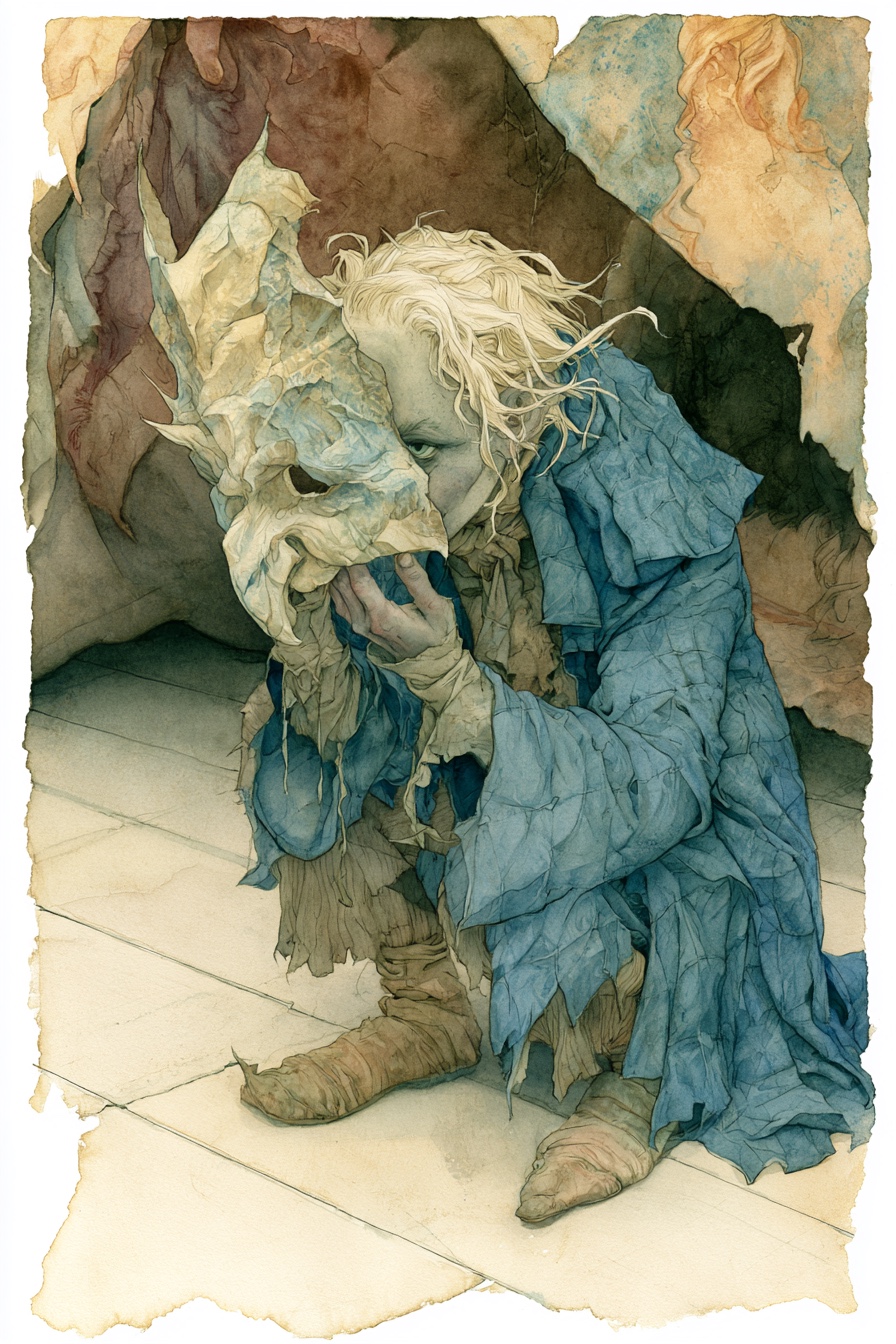
This card represents the disconnect between outward success and internal mathematics. It is the card of the magician who dazzles the audience with fireworks while the stage beneath them is quietly collapsing.
The Data Signature
- The Financial Score sits in the bottom quartile for 5 consecutive years.
- The Program Score remains high (the public-facing mission looks great).
The Meaning
When drawn upright, the organization is living an unsustainable lie. They are producing beautiful art and robust community programs, but they are paying for it by borrowing from their future—either by depleting an endowment, racking up debt, or failing to pay their staff living wages. The math will eventually catch up to them.
The Remedy (Prescription)
Actionable Advice for Funders
Do not be fooled by their beautiful annual report or their incredible artistic output. Ask for their balance sheet. If you fund them, require the funds to be placed into a restricted operating reserve or debt-retirement vehicle, rather than funding another new program.
When Reversed (Sacrifice)
When reversed, it indicates "the hard pivot." The organization has finally stopped pretending. They are making painful cuts to their public programming in order to balance their budget and rebuild their financial reserves.
Thumbprint
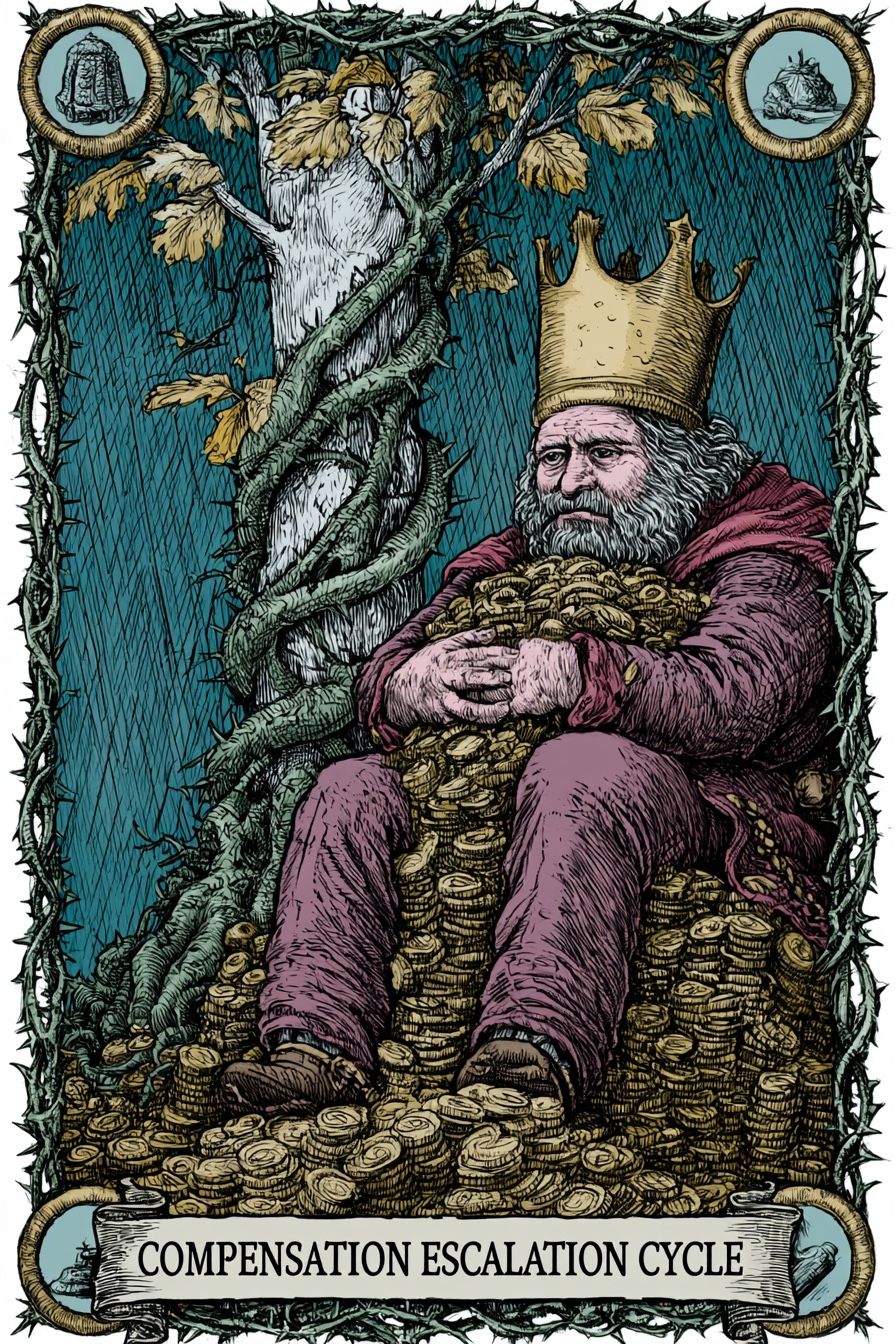
Compensation Escalation Cycle
The State (Diagnosis)
Archetypal Identity
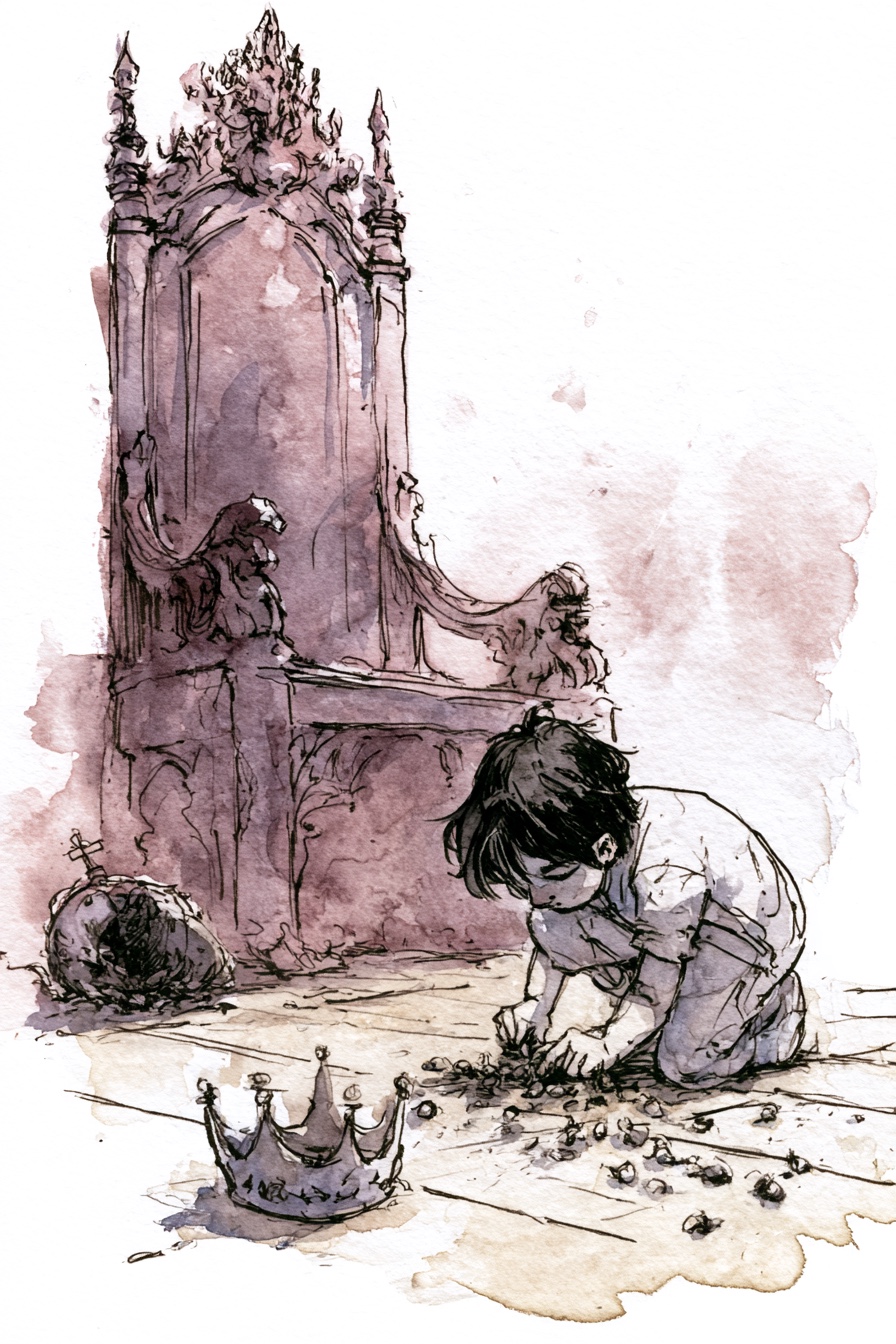
This card represents greed operating under the cover of compliance. It is the card of the executive who views the nonprofit as their personal fiefdom, extracting maximum wealth while providing minimal growth.
The Data Signature
- Total organizational revenue grows modestly (e.g., at inflation rates).
- Top officer compensation grows consistently for 5 years, eventually breaching the dangerous >12% comp-to-revenue ratio.
The Meaning
When drawn upright, the board of directors has completely failed their fiduciary duty. They are acting as a rubber stamp for an aggressive executive who is negotiating massive annual raises without delivering proportional scale or impact for the organization. The mission is being starved to feed the leader.
The Remedy (Prescription)
Actionable Advice for Funders
Hold your funding. Send a letter directly to the Board Chair (not the Executive Director) asking them to justify the executive compensation ratio. Make it clear that your philanthropic dollars will not be used to subsidize a single individual's outsized salary.
When Reversed (Sacrifice)
When reversed, it indicates a "regime change." The board finally woke up, fired the mercenary executive, and hired a new leader at a sustainable market rate, returning the excess capital to the mission.
Thumbprint
Compliance Decay
The State (Diagnosis)
Archetypal Identity
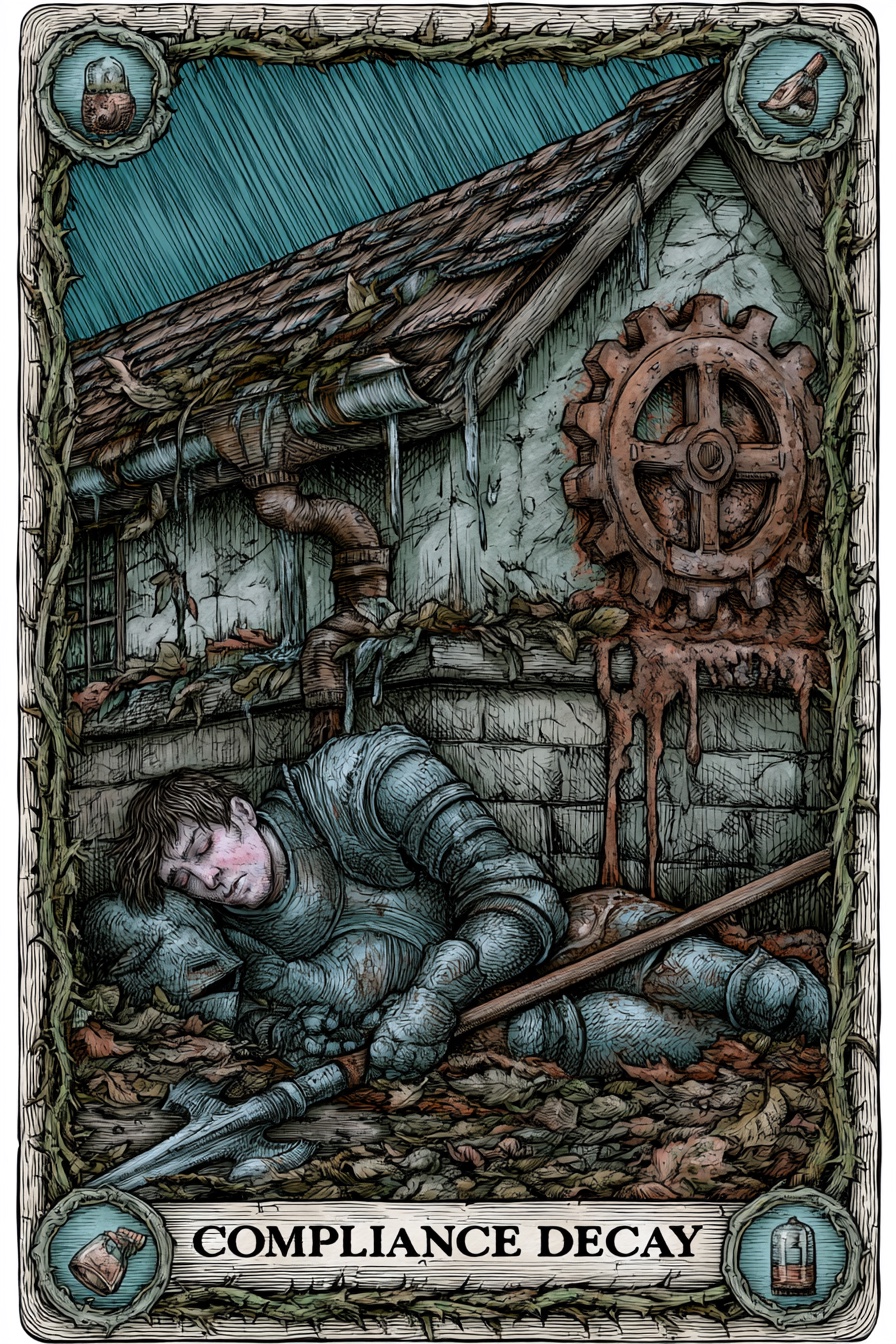
This card represents the danger of boredom and comfort. It is the card of the lazy watchman who falls asleep at their post because the weather has been nice for too long.
The Data Signature
- The Financial Score remains perfectly stable over 5 years.
- The Governance Score slowly decays (board size shrinks, policies expire, 990 checkboxes go empty).
The Meaning
When drawn upright, the organization has fallen victim to its own financial stability. Because there is no immediate financial crisis, the board has stopped doing the "boring" work of oversight. They aren't replacing departing board members, they aren't reviewing policies, and they are letting their legal armor rust. They are deeply exposed to a sudden lawsuit or compliance audit.
The Remedy (Prescription)
Actionable Advice for Funders
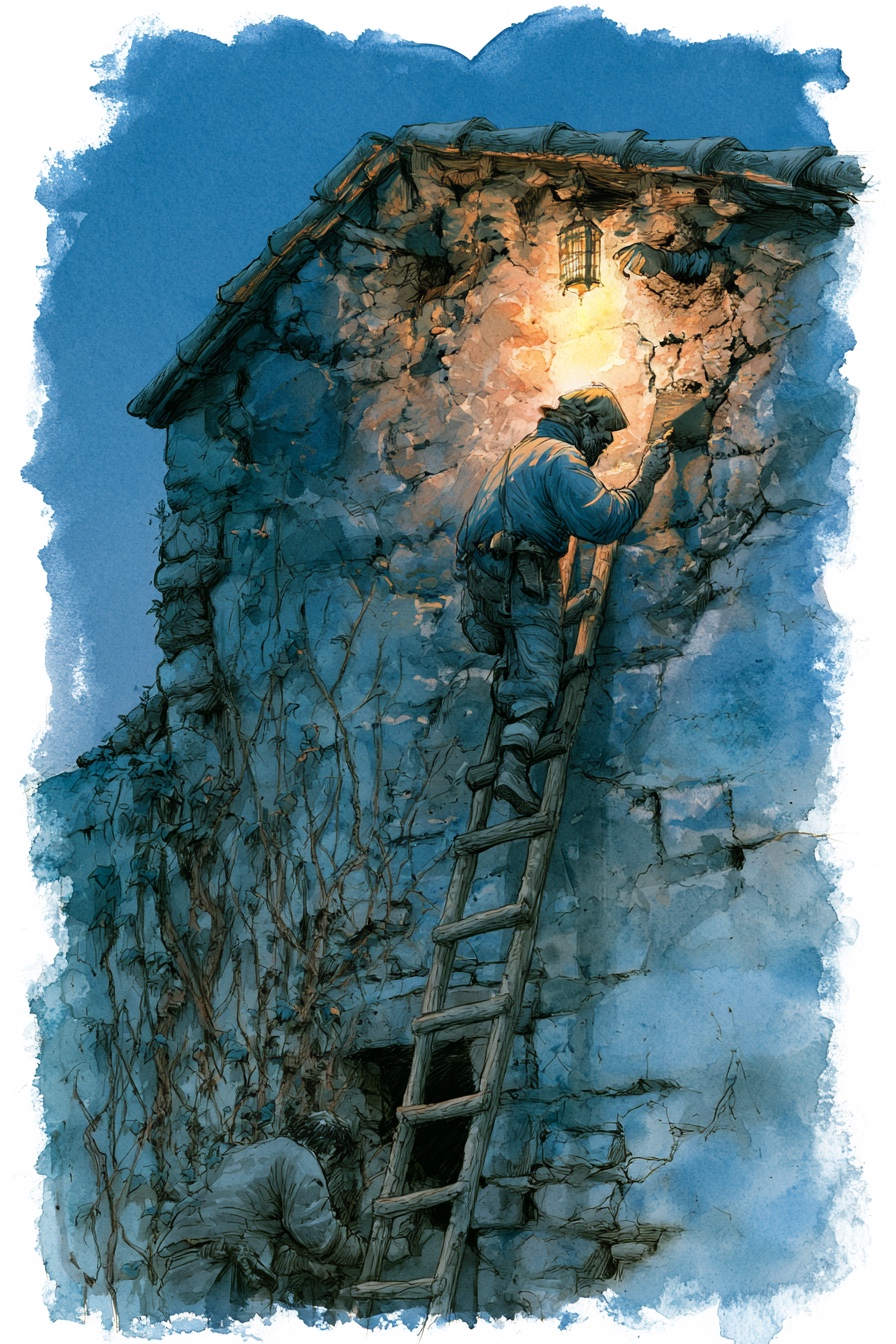
Require an independent governance audit. The organization does not need money; they need a wake-up call. Refuse to write the next check until their board size is restored and their conflict-of-interest and whistleblower policies are legally updated.
When Reversed (Sacrifice)
When reversed, it indicates a "sudden audit." The organization experienced a minor scare that woke the board up, prompting a flurry of policy-writing and compliance updates to rebuild their armor.
Thumbprint
Mission Drift
The State (Diagnosis)
Archetypal Identity
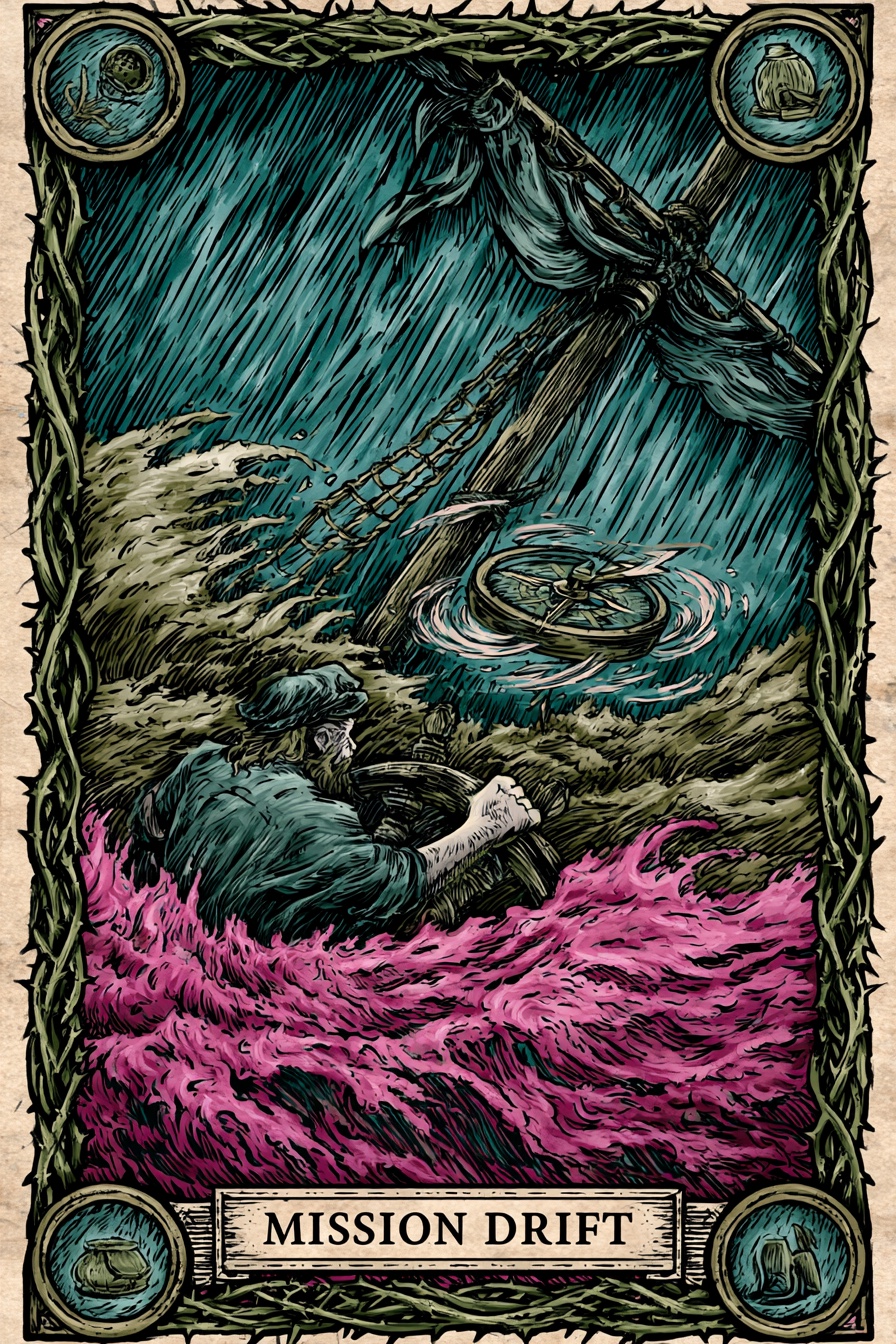
This card represents the loss of a true north. It is the card of the shapeshifter, constantly changing colors to please whoever happens to be holding the purse strings today.
The Data Signature
- Highly volatile revenue swings year over year (e.g., +40%, -30%, +50%).
- Fluctuating Program Scores that wildly change depending on the year.
The Meaning
When drawn upright, the organization has no core business model. They are surviving by chasing whatever restricted grant funding is currently trendy. If a funder wants a tech program, they become a tech nonprofit. If a funder wants arts, they become an arts nonprofit. This constant pivoting prevents them from ever building deep expertise, community trust, or structural sustainability.
The Remedy (Prescription)

Actionable Advice for Funders
Do not give this organization restricted funding to start a new program—you will only make the problem worse. If you believe in their leadership, give them multi-year unrestricted general operating support so they can stop chasing trends and finally build a stable core mission.
When Reversed (Sacrifice)
When reversed, it signifies "finding the anchor." The organization has boldly turned down a massive grant because it didn't align with their core mission, signaling that they have finally matured enough to say "no."
Thumbprint
Steady State
The State (Diagnosis)

Archetypal Identity
This card represents balance, focus, and quiet consistency. It is the card of the grower who keeps their feet on the ground and stewards their orchard year after year without needing to construct monuments.
The Data Signature
- No extreme year-over-year deviations.
- Financial and governance scores remain stable within the Healthy range.
- Program spending and compensation remain proportional to scale.
The Meaning
When drawn upright, the organization is in a state of healthy equilibrium. It has found its natural scale and is sustaining its operations with calm, steady governance. This is not static boredom; it is active stewardship.
The Remedy (Prescription)

Actionable Advice for Funders
This is a reliable, low-risk partner. Support their core operations. Do not force them to scale or expand their footprint unnecessarily; instead, celebrate their role as a durable community anchor.
When Reversed (Sacrifice)
When reversed, it represents stagnation or resistance to change. The organization has become overly complacent, settling into a comfortable plateau and ignoring new community needs.
5-10+ years
Generational Lifecycles
Long arcs that show what kind of institution the organization has become.
Thumbprint
The Founder's Trap
The State (Diagnosis)
Archetypal Identity
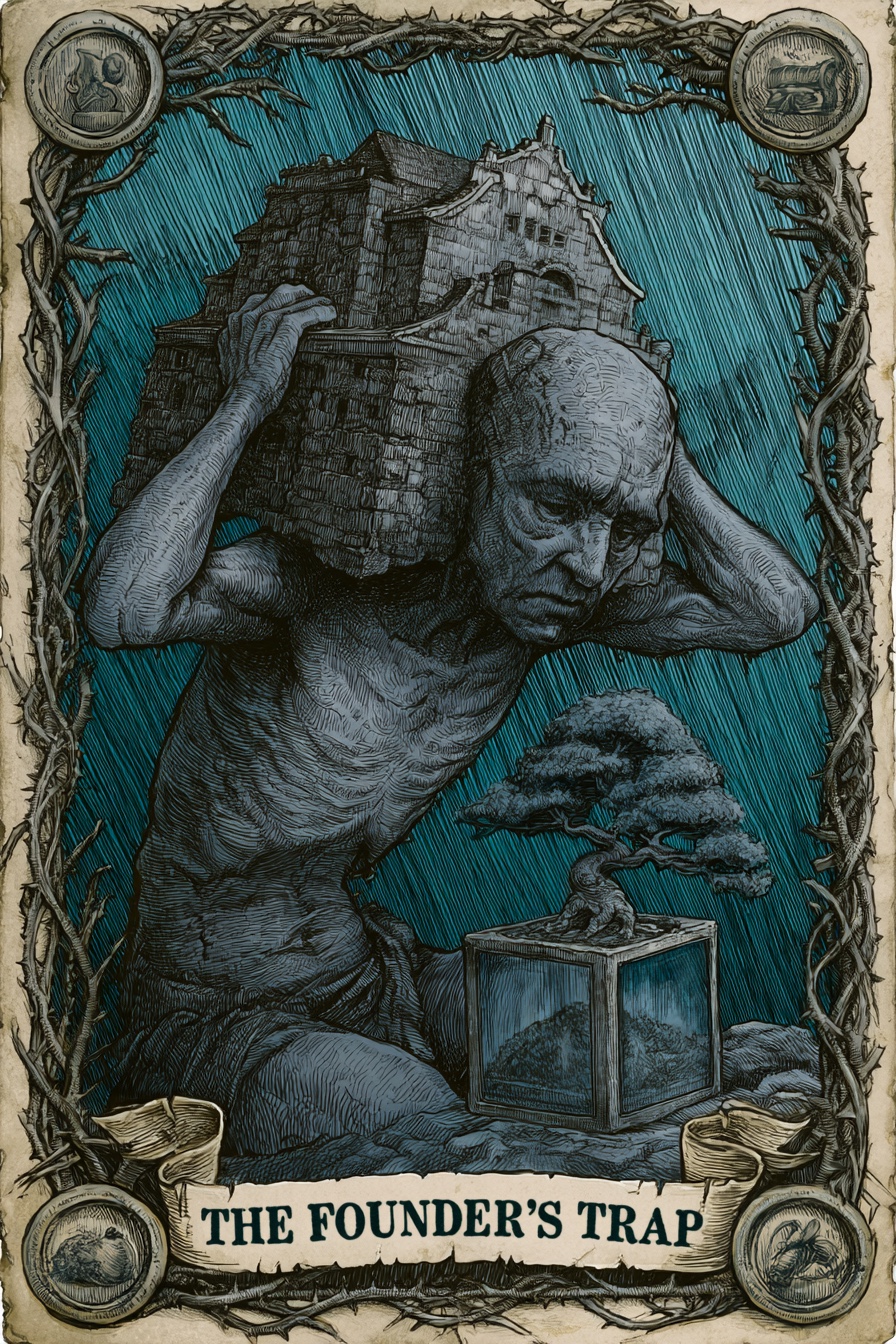
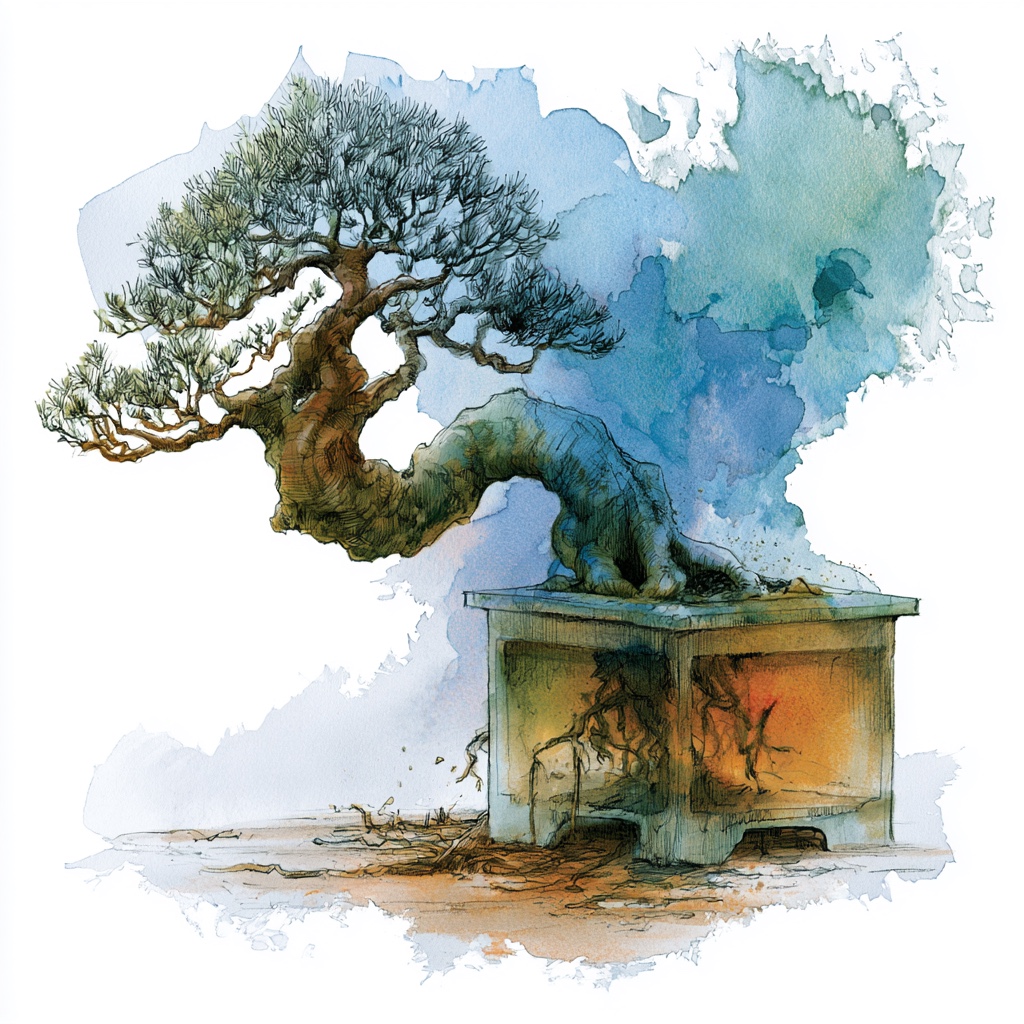
This card represents the beautiful but tragic sacrifice of a visionary. It is the card of the martyr who loves the organization so much that they refuse to let it grow beyond what they can personally carry on their back.
The Data Signature
- 10-year flat revenue and scale.
- Consistently below-market executive compensation.
- A constantly small, unchanging board size.
The Meaning
When drawn upright, the organization is trapped by the very person who built it. The mission is surviving purely on the unpaid sweat equity of a founder who refuses to take a market-rate salary or build a larger board. While the mission is pure, the organization is utterly un-transferable. When the founder retires or burns out, the organization will likely die with them.
The Remedy (Prescription)
Actionable Advice for Funders
Have a very hard conversation about succession planning. Offer to fund a capacity-building grant specifically to raise the executive director's salary to a market rate, proving to the board that the organization can mathematically afford to hire a replacement when the founder leaves.
When Reversed (Sacrifice)
When reversed, it indicates a "successful succession." The founder has finally stepped aside, a market-rate executive has been hired, and the board has successfully scaled the budget to pay for the true cost of the mission.
Thumbprint
Endowment Ossification
The State (Diagnosis)
Archetypal Identity
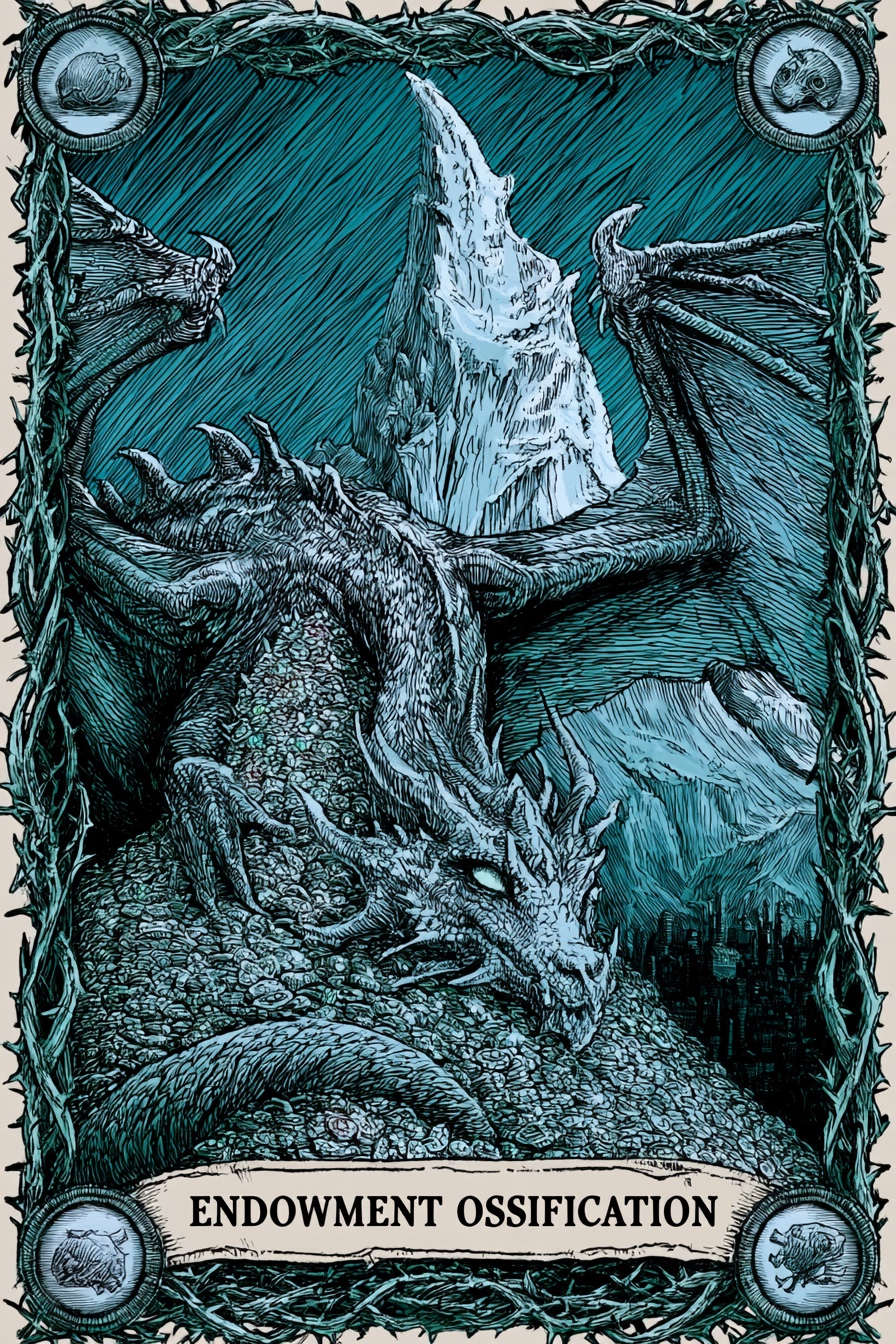
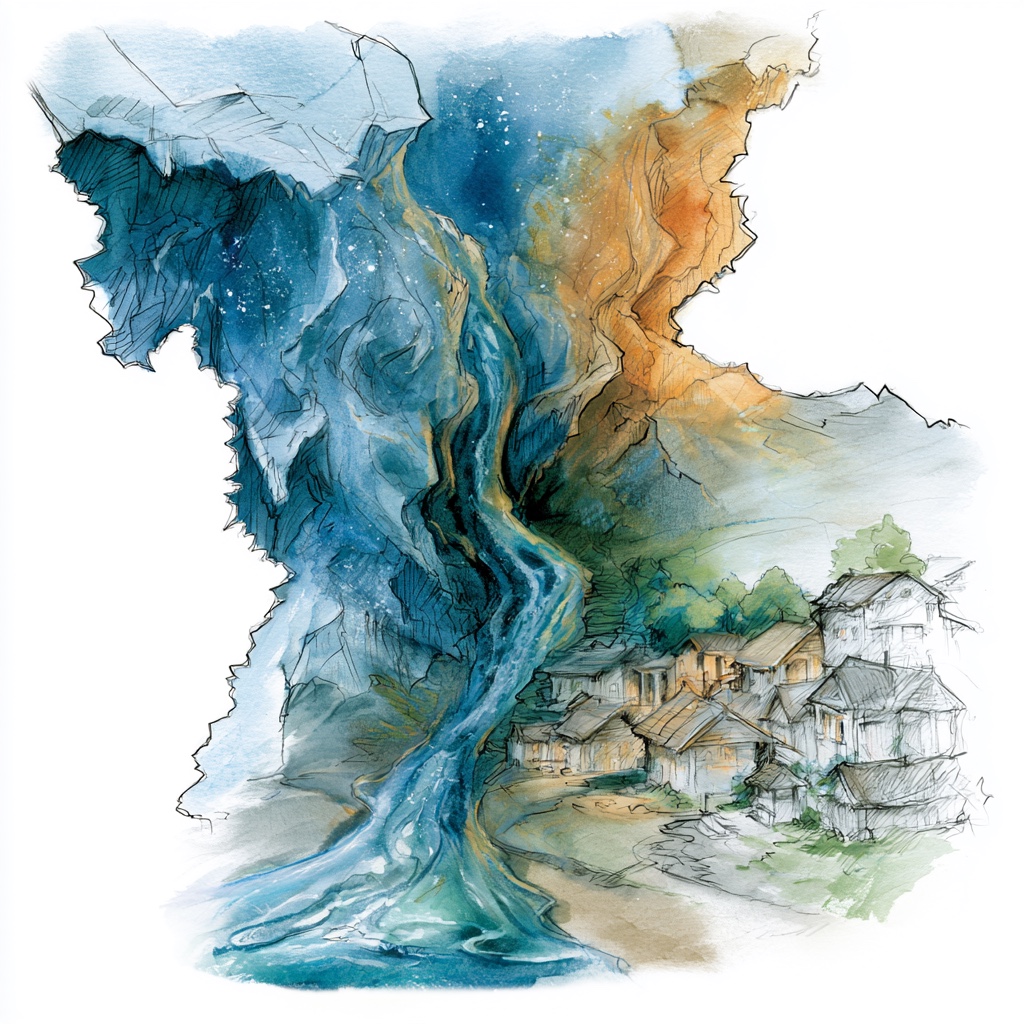
This card represents the tragedy of hoarded potential. It is the card of the dragon sleeping on a mountain of gold while the villagers outside starve.
The Data Signature
- Massive asset accumulation over 10 years (The Financial Score is perfectly maxed out).
- The Program Score drops significantly over the same decade.
The Meaning
When drawn upright, the organization has lost its soul to its bank account. They have functionally become a hedge fund with a tiny arts program attached. The board is obsessed with protecting the endowment corpus at all costs, refusing to deploy capital for public benefit even when the community desperately needs it. They are wealthy, but creatively dead.
The Remedy (Prescription)
Actionable Advice for Funders
Do not give this organization another dime. They do not need your money; they are hoarding it. Redirect your funding to the hungry, scrappy organizations at the grassroots level that will actually deploy the capital into the community immediately.
When Reversed (Sacrifice)
When reversed, it indicates a "thaw." The board has boldly decided to increase their endowment draw rate, unlocking capital to launch a massive new programmatic initiative or community grant program.
Thumbprint
Institutional Maturation
The State (Diagnosis)
Archetypal Identity
This card represents the highest ideal of nonprofit leadership. It is the card of the master builder who constructs a cathedral they know they will never live to see finished.
The Data Signature
- 10-year slow, steady, concurrent growth.
- The Financial Health, Governance Score, and Program Scale are all moving upward in lockstep.
The Meaning
When drawn upright, this is the gold standard. The board and executive leadership are in perfect alignment. They are scaling their oversight, their fundraising, and their mission impact concurrently. They do not take risky leaps, and they do not hoard money. They are a "Blue Chip" investment that will anchor the community for generations.
The Remedy (Prescription)
Actionable Advice for Funders
This organization is a foundational pillar of the sector. Use them as an anchor. Provide them with massive, multi-year, unrestricted funding, and ask their leadership to mentor smaller, struggling organizations in your portfolio.
When Reversed (Sacrifice)
When reversed, it indicates a rare "growth plateau." The organization is perfectly healthy but has become too comfortable, perhaps needing a visionary shock to the system to avoid slipping into complacency.
Thumbprint
The Hollow Shell
The State (Diagnosis)
Archetypal Identity
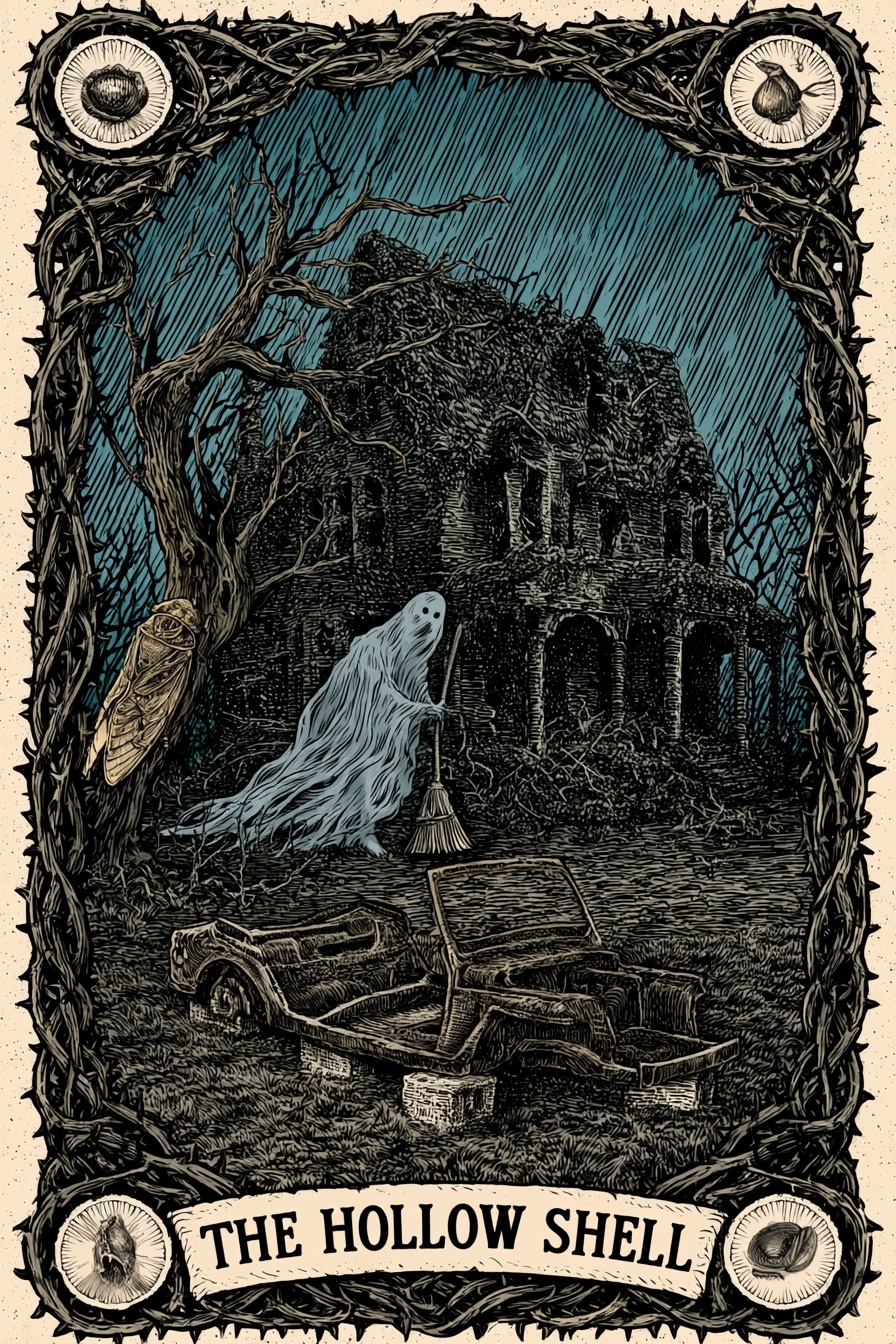
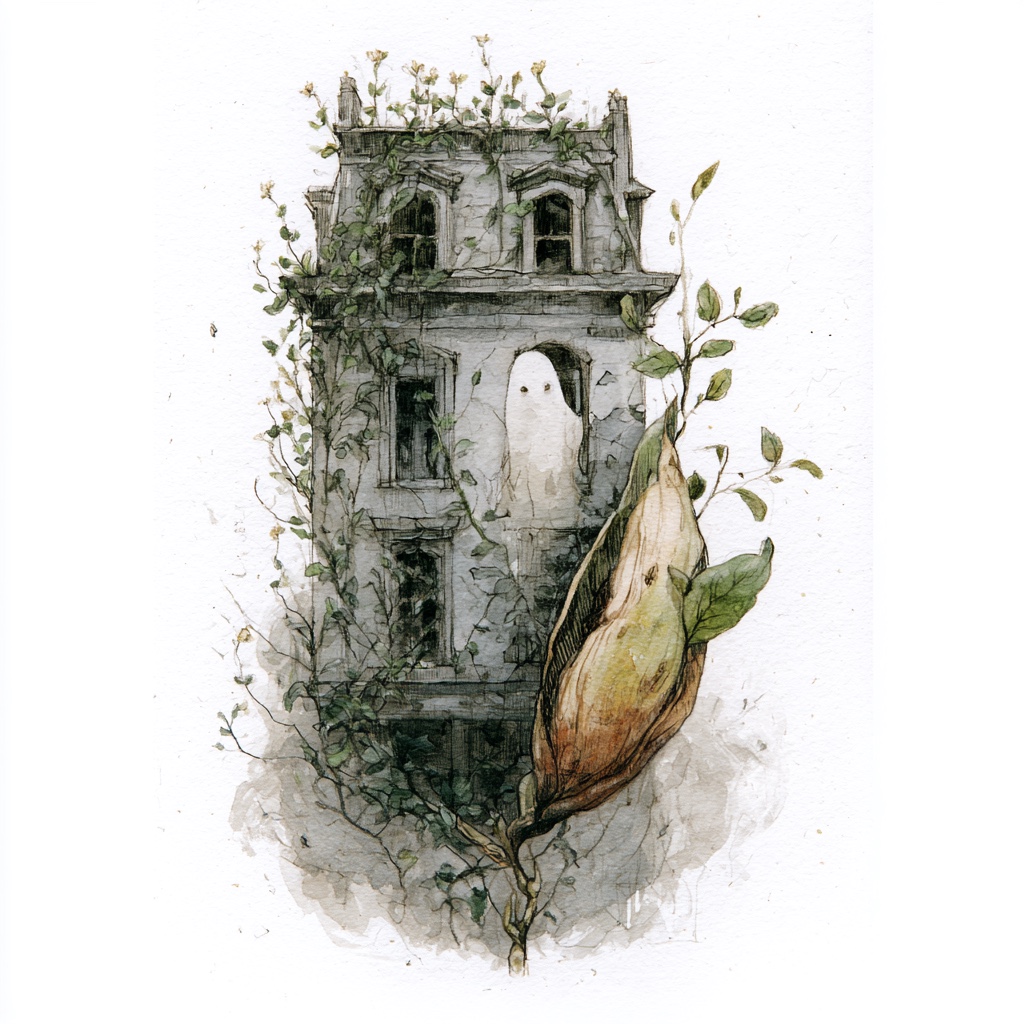
This card represents the refusal to let go. It is the card of the ghost haunting an empty house, draining the last drops of warmth from a structure that died years ago.
The Data Signature
- A 10-year slow bleed. Revenue shrinks slightly every single year.
- Board size shrinks to the legal minimum (usually 3).
- The Program Score collapses to near-zero.
The Meaning
When drawn upright, the organization has outlived its purpose but refuses to formally dissolve. It is slowly burning through its remaining historical assets just to pay a single administrator to keep the lights on or to file the annual paperwork. There is no art being made, and no community being served. It is a "Zombie Asset."
The Remedy (Prescription)
Actionable Advice for Funders
Do not attempt a rescue. The community has already moved on. Advise the remaining board members on the legal process of dissolution, and suggest they transfer their remaining meager assets to a vibrant, younger organization that carries on the spirit of their original mission.
When Reversed (Sacrifice)
When reversed, it signifies a "graceful exit." The board has recognized the end of the lifecycle, responsibly spent down the remaining assets, and is formally dissolving the corporation to make room for new organizations to rise.
Closing thesis
More than financials on a page.
Organizations are more than filings, more than annual numbers, and more than one-year snapshots. They are people, habits, history, and momentum.
ArtMetrics helps make that visible. We connect the line to the life behind it so donors, members, and leaders can understand not just what an organization reported, but what it is bringing to the community.
Title
-
Institutions
-
Avg Revenue
-
Risk Profile